The Hidden Costs of a Destination Wedding in Italy: What Couples Often Forget

When planning a destination wedding in Italy, most couples remember the big-ticket items: venue, catering, flowers, photography and music.
But what about everything else?
Some costs are small, others definitely aren’t. The problem is that they often appear only once planning is already underway — and together they can make a significant difference to your final budget.
If you’re still calculating the main expenses, start with our guide to How Much Does a Destination Wedding in Italy Really Cost?
Here are ten costs couples often forget.
1. Invitations, Wedding Website & Stationery
Printed invitations are no longer essential. Many couples send a digital Save the Date — sometimes simply via WhatsApp — and create a wedding website for travel information, accommodations, RSVPs and the weekend schedule.
But stationery doesn’t disappear.
Menus, place cards, table names, seating charts, welcome cards, thank-you cards, favor tags and welcome bag materials all contribute to the wedding’s visual identity. And with several events during a destination wedding, you may need more than one set.
Small items multiply quickly.
2. Wedding Favors
A small bottle of Italian olive oil, wine, grappa, or limoncello sounds like a simple gift.

Then you choose a prettier bottle. A special stopper. A personalized label. Beautiful packaging. A ribbon and a coordinated thank-you tag.
Suddenly, the inexpensive little bottle isn’t quite so inexpensive.
Often, it’s not the product itself that increases the cost, but its personalization and presentation.
3. The Celebrant
Whether you need an English-speaking priest or a professional celebrant for a symbolic ceremony, remember to include this service in your budget.
A good celebrant’s work starts months before the wedding, with meetings — often via Zoom — to get to know you and create a ceremony that truly reflects your story.
And if the right person has to travel to your wedding location, transportation and possibly accommodations need to be considered too.
4. Legal & Religious Paperwork
If you want to be legally married in Italy — with a civil ceremony or a religious ceremony with civil validity — paperwork can become an important part of the planning. Religious-only ceremonies may also require specific documentation.
Requirements depend on your nationality, the type of ceremony and the agreements between Italy and your home country.
Sworn translations, apostilles or legalizations may be required, together with coordination between municipalities, embassies or consulates, dioceses and parishes.
There is no universal cost. But bureaucracy takes time, expertise and sometimes many months of preparation.
5. Meals for Your Wedding Staff
Photographers, videographers, DJs, musicians, planners, assistants and technicians may work 12 to 18 hours on your wedding day.
In Italy, providing them with a staff meal is standard practice — and simply good sense.
They don’t need your guests’ menu. Catering companies normally provide a simpler meal at a reduced price and a separate area where the team can sit, eat and take a short break.
With 10, 15 or even 20 professionals working on your wedding, remember to include those meals in your numbers.
6. Lighting, Fireworks & Cold Sparks
Lighting isn’t just decoration. Once the sun sets, dinner areas, pathways, the bar, cake cutting and dancing all need to be properly lit.
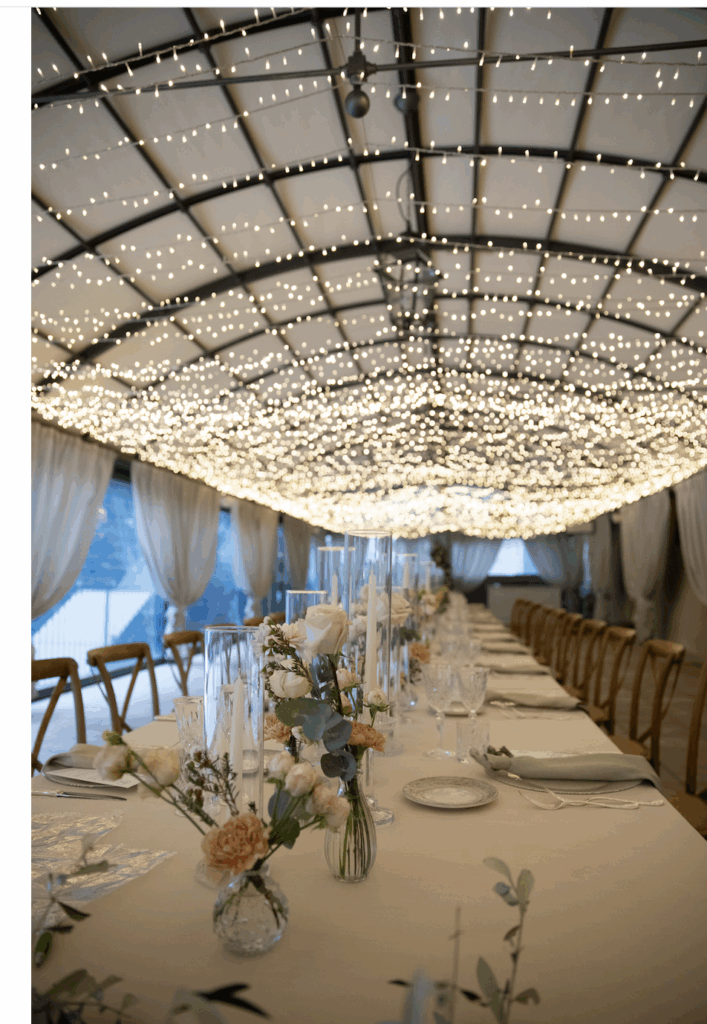
Even those beautiful string lights you see everywhere may not be included by the venue and can require a professional service for installation and removal.
Fireworks require venue approval and the necessary local authorizations. And they’re not a tiny extra: a professional display of around ten minutes can cost approximately €10,000. Synchronizing it with music can add further technical costs.
Cold spark fountains can cost around €100 each, with several usually required.
7. Bridal Makeup & Hair
Bridal beauty can become a significant expense, particularly when the service is offered to mothers, grandmothers, bridesmaids or friends as well as the bride.
And your makeup artist may not be your hairstylist.
Depending on how many people need to be ready, you may require two professionals or even additional assistants. The bride’s makeup and hair trials before the wedding should also be included.
Before budgeting for beauty, decide exactly who you’d like to include.
8. Tips
Couples from countries with a strong tipping culture ask us about this all the time.
Tipping is not mandatory in Italy, nor is it normally calculated as an automatic percentage of every wedding service.
It is, however, always appreciated as recognition of excellent service.
So while tipping remains completely optional, if you’d like to thank several members of your wedding team, leave a little room for it in your budget.
9. Your Wedding Planner
Professional wedding planning shouldn’t be the expense you remember after everything else — particularly when you’re organizing a wedding thousands of miles from home.
A planner doesn’t simply recommend venues and vendors. The job is to build and manage the entire project, coordinate its moving parts, anticipate problems and help you make informed decisions about your budget.
Fees vary according to the complexity of the wedding and the services required, so there is no meaningful universal figure.
But planning belongs in the budget from day one, not at the end.
10. The Wedding Car You Didn’t Think You Needed

If you’re staying, marrying and celebrating at the same venue, you may not need a wedding car at all.
But you’re getting married in Italy…
Perhaps you’ve fallen for a vintage Fiat 500, dream of arriving in a beautiful classic car or simply can’t resist experiencing a Ferrari or Lamborghini on your wedding day.
We understand completely.
Necessary or not, if it’s part of your Italian wedding dream, give it a place in the budget.
The Details Make the Real Budget
Not every wedding needs everything on this list.
The point isn’t to add every possible expense. It’s to know these costs exist before you finalize your budget, so you can decide what matters to you rather than discovering unexpected expenses later.
And that brings us to another question couples ask constantly:
What can €30,000, €50,000 or €70,000 actually buy for a wedding in Italy?
Because €30,000 for 20 guests and €30,000 for 80 guests are two completely different weddings.
That’s what we’ll talk about next.